Frontiers of Knowledge

Delving into the universe's mysteries, life's intricacies, and the fundamental laws that govern our reality.

Cosmic Discoveries and Deep Space

Artist's impression of a distant exoplanet with a ring system

Alien Worlds: Beyond Our Solar System

Astronomers have identified thousands of exoplanets, dramatically expanding our understanding of planetary formation and the potential for life beyond Earth. Recent advancements in telescopic technology, such as the James Webb Space Telescope, are allowing us to analyze the atmospheres of these distant worlds, searching for biosignatures – indicators of biological processes. The search for habitable zones, regions around stars where liquid water could exist on a planet's surface, continues to yield promising candidates, igniting our imagination about what other forms of life might be out there. From gas giants with spectacular ring systems to potentially Earth-like rocky planets orbiting red dwarf stars, the diversity of exoplanets is astonishing. Each new discovery pushes the boundaries of our knowledge and fuels the quest to answer humanity's oldest question: are we alone?

"The universe is under no obligation to make sense to you."
- Neil deGrasse Tyson
Image depicting a nebula in deep space

Nebulae: Stellar Nurseries and Cosmic Art

These vast interstellar clouds of dust and gas are the birthplaces of stars and planetary systems. Stunning images from space observatories reveal their intricate beauty and the dynamic processes occurring within them.

Read More →

Illustration of a black hole with an accretion disk

The Enigma of Black Holes

From supermassive black holes at galactic centers to stellar-mass remnants of collapsed stars, these enigmatic objects continue to challenge our understanding of gravity and spacetime. Recent observations have provided unprecedented insights into their properties.

Read More →

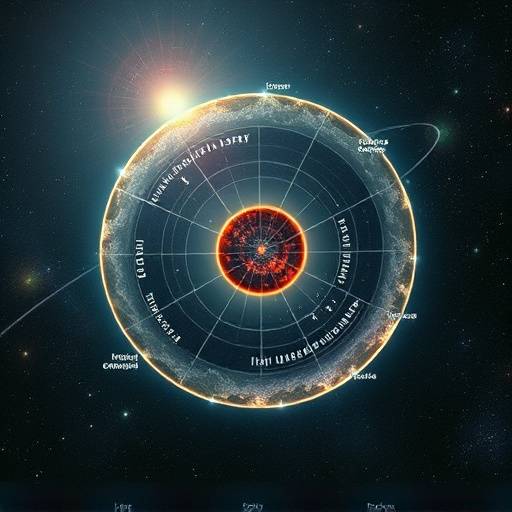
Diagram showing the heliosphere and interstellar medium

Voyagers' Journey to Interstellar Space

The twin Voyager spacecraft, launched decades ago, have now crossed the heliopause, venturing into the realm of interstellar space. Their ongoing mission provides invaluable data about the conditions beyond our Sun's direct influence.

Read More →

Life Sciences: Unlocking Biological Secrets

Microscopic view of DNA strands

The Revolution of Gene Editing

CRISPR-Cas9 technology has revolutionized genetic engineering, offering unprecedented precision in modifying DNA. This breakthrough holds immense promise for treating genetic diseases, developing new crops, and advancing our understanding of fundamental biological processes. Ethical considerations surrounding its application, however, remain a crucial topic of global discussion. Researchers are exploring its potential for tackling inherited conditions like cystic fibrosis and sickle cell anemia, as well as developing more resilient and nutritious food sources. The intricate dance of genes and proteins, once largely inaccessible, is now being mapped and manipulated, opening doors to therapies and innovations previously confined to science fiction.

"Nothing in biology makes sense except in the light of evolution."
- Theodosius Dobzhansky
Image of a complex protein structure

Understanding Protein Folding

The three-dimensional structure of proteins is vital for their function. Researchers are employing advanced computational models and experimental techniques to unravel the complex process of protein folding, crucial for diagnosing and treating diseases like Alzheimer's and Parkinson's.

Read More →

Illustration of a microbiome in the human gut

The Gut Microbiome: A Second Brain

Our intestines teem with trillions of microorganisms that play a critical role in our health, influencing digestion, immunity, and even mood. Scientists are actively mapping the gut microbiome and exploring its therapeutic potential.

Read More →

Image of a deep-sea hydrothermal vent ecosystem

Life in Extreme Environments

From the crushing depths of the ocean to volcanic hot springs, extremophiles showcase the incredible adaptability of life. Studying these organisms provides insights into the origins of life and the potential for life on other planets.

Read More →

Physics and Materials: Shaping the Future

Artist's depiction of a quantum computer qubit

The Dawn of Quantum Computing

Quantum computing promises to revolutionize fields ranging from medicine and materials science to artificial intelligence and cryptography. By harnessing the principles of quantum mechanics, these powerful machines can perform calculations far beyond the reach of even the most advanced supercomputers. Researchers are making significant strides in building stable qubits and developing quantum algorithms. The potential applications are vast: discovering new drugs by simulating molecular interactions with unprecedented accuracy, designing novel materials with specific properties, and solving complex optimization problems in logistics and finance. While still in its nascent stages, quantum computing represents a paradigm shift in computational power.

"The only way to do great work is to love what you do."
- Steve Jobs
Key Particle Accelerators and Their Contributions
Accelerator Location Primary Research Focus Notable Discoveries
Large Hadron Collider (LHC) CERN, Switzerland/France Particle Physics, Higgs Boson, Dark Matter Discovery of the Higgs boson, exploration of supersymmetry
Super Kamiokande Japan Neutrino Physics, Supernovae Evidence of neutrino oscillations
SLAC National Accelerator Laboratory USA Particle Physics, Materials Science Discovery of the tau lepton, advanced X-ray free-electron laser applications

Environmental Science: Protecting Our Planet

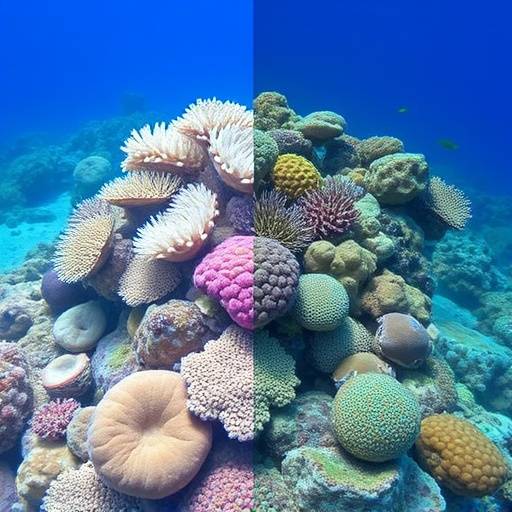
Image of a thriving coral reef contrasting with a bleached one

Climate Change: Understanding and Mitigating Impacts

The scientific consensus on climate change is robust: human activities are altering Earth's climate system at an unprecedented rate. The Emerald Chronicle is committed to providing in-depth coverage of the causes, consequences, and potential solutions to this global challenge. From rising sea levels and extreme weather events to the impact on biodiversity and ecosystems, our science journalists explore the latest research. We highlight innovations in renewable energy, sustainable agriculture, and carbon capture technologies, while also examining the socio-economic and political dimensions of climate action. Understanding the intricate feedback loops within our planet's systems is paramount to developing effective strategies for adaptation and mitigation, ensuring a sustainable future for generations to come.

"The environment is where we all meet; where we all have a mutual interest; it is the one thing all of us share."

- Lady Bird Johnson
Image of a polar bear on melting ice

Arctic Melt: A Global Indicator

The rapid melting of Arctic ice is a stark visual indicator of global warming, with profound implications for sea levels, weather patterns, and ecosystems worldwide. Research into Arctic cryosphere dynamics is vital.

Read More →

Illustration of renewable energy sources like wind turbines and solar panels

The Green Energy Transition

As the world seeks to decarbonize, the development and deployment of renewable energy technologies are accelerating. We explore the latest advancements in solar, wind, geothermal, and other sustainable energy solutions.

Read More →

Image of a reforestation project

Biodiversity Conservation Efforts

Protecting Earth's vast array of species and habitats is crucial for ecosystem health and resilience. This article examines successful conservation strategies and the ongoing challenges in preserving our planet's natural heritage.

Read More →